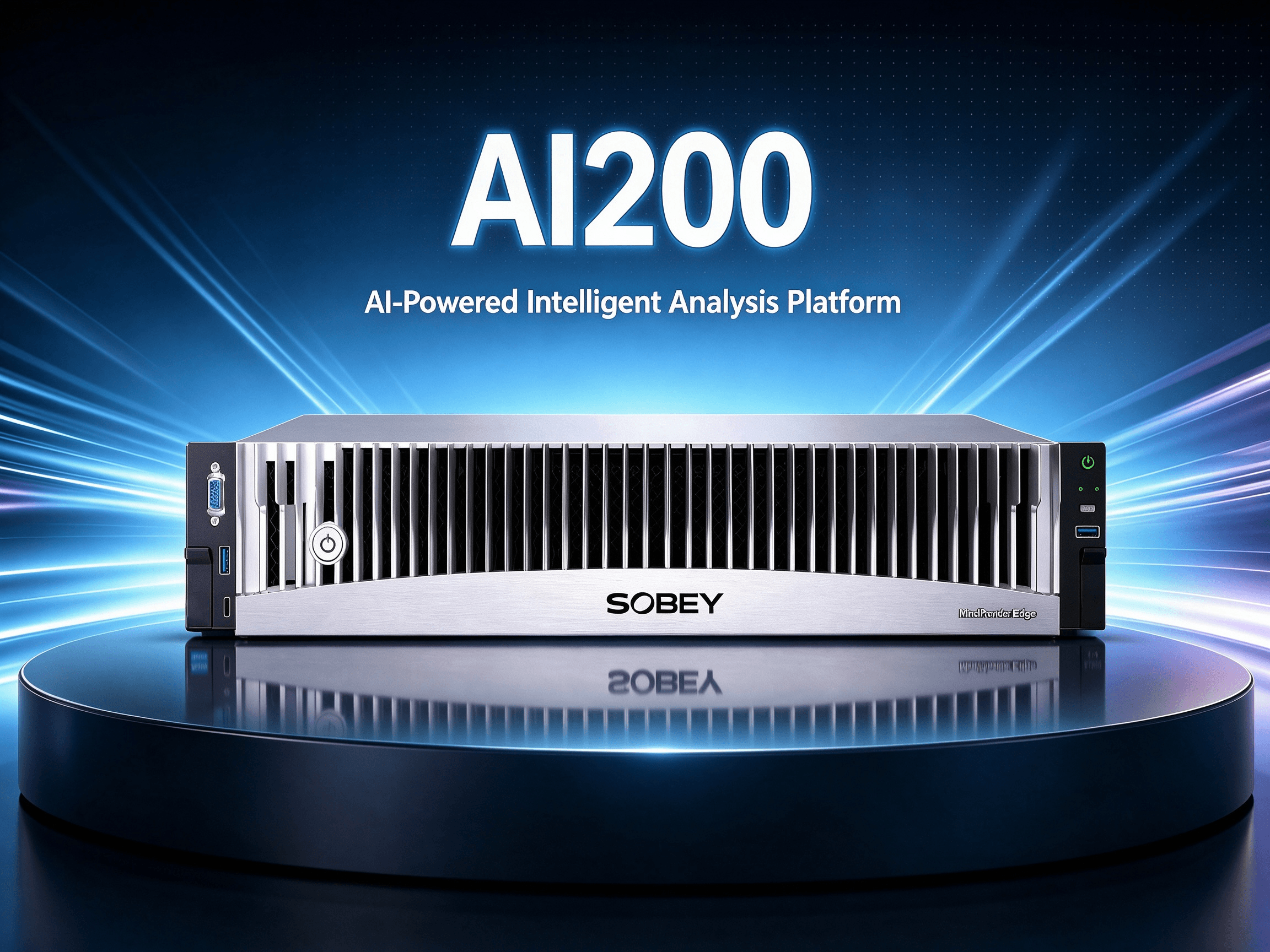
AI200
High-performance intelligent analysis unit.
Up to 20-channel real-time multi-modal AI recognition, compatible with SDI and mainstream IP streaming protocols — generating rich metadata tags that work with Sobey recorders and storage to boost intelligent post-production efficiency.
Overview
AI200 is a high-performance intelligent analysis unit providing AI processing for deep, real-time analysis of live video and audio signals, applicable to radio and television, video surveillance, and intelligent media production. A single device analyses up to 20 channels at under 2 seconds average latency. Working alongside the REC-1026 and REG-1024 recorders, the SS20 storage unit, and shared storage, it writes results straight into the material's metadata files.
Challenge
Most media AI runs on files, after the event. Live production needs to know what is in the signal while the signal is still live — and needs that knowledge to land somewhere an editor will actually find it.
Post-hoc analysis
Analysis run after ingest means decoding the material twice and waiting for the result before anyone can search it.
Scale of live channels
A large production carries dozens of feeds; one analysis box per channel does not scale to that.
Tags that go nowhere
Results shown on a dashboard and never written into the media are lost to the people editing it.
Protocol spread
Signals arrive as SDI and as streams over several protocols; one analysis unit has to take them all.
Solution
AI200 watches the live signal and writes what it sees into the material.
Key Features
- Scale and latency — A single device supports up to 20 channels of AI real-time analysis on live video and audio streams, at under 2 seconds average latency.
- Recognition set — Scene recognition, face recognition, speech recognition, entity extraction, and shot-motion recognition — adjustable to available resources and user needs.
- Results on the timeline — Per recording channel: faces analysed frame by frame and shown on a timeline, scenes shown as colour blocks — news titles, trailers, end credits — and speech converted to text with entity tags for time and person names, labelled in real time.
- Tags in the media — Media tagging covers timecode, face, voice, background and brightness tags, written into the material's metadata files for intelligent editing and post-production.
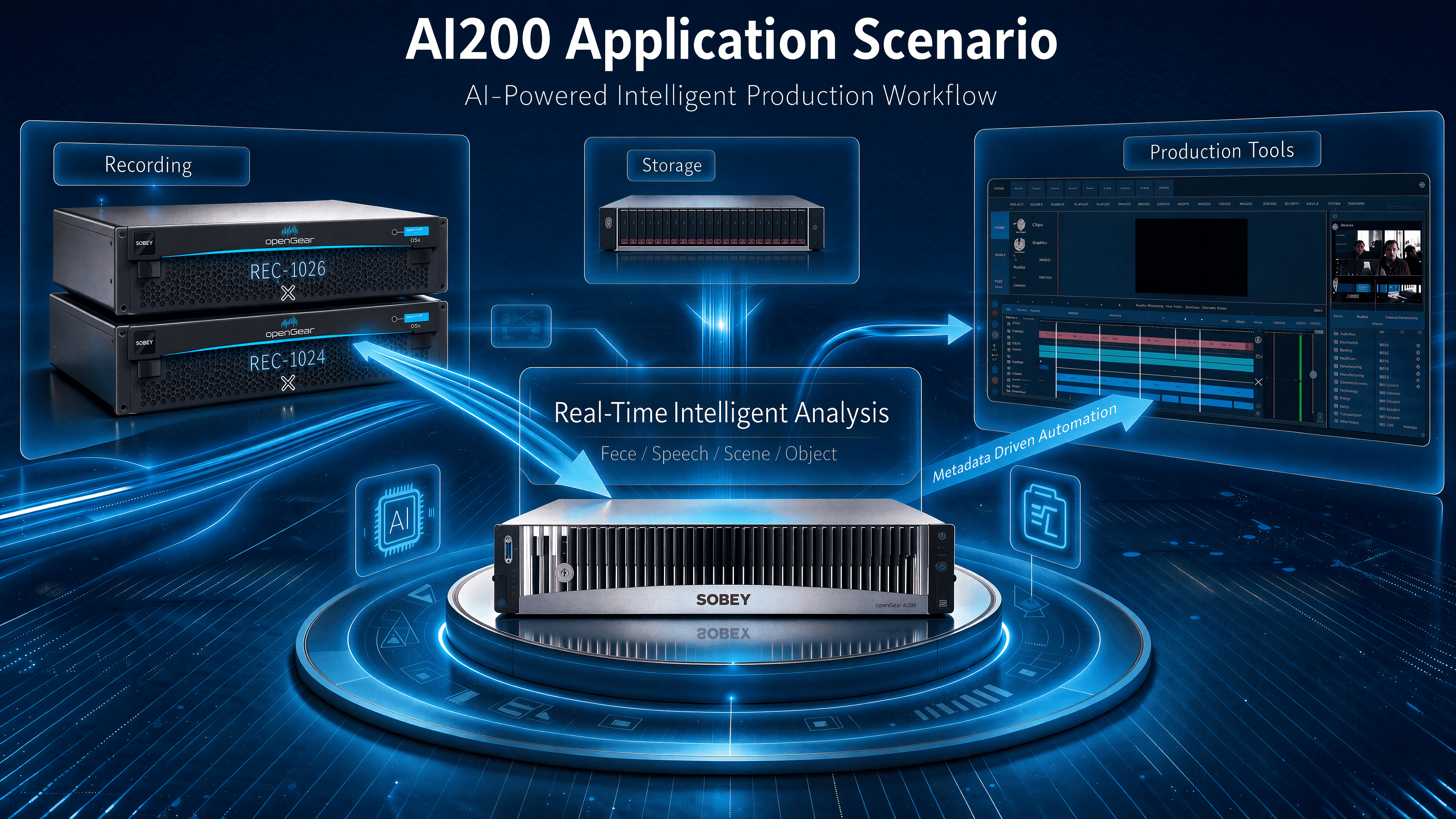
- Working set — Collaborates with the REC-1026 and REG-1024 recorders, the SS20 storage unit, and shared storage, analysing recording tasks as they run.
- Interfaces — Compatible with TCP/IP, WebRTC, RTSP, RTMP, and SDI, with dual 25G QSFP28 media ports, 4 × DisplayPort 1.4, VGA, multi-version USB, and RJ45 management Ethernet — on redundant power for 24/7 broadcast operation.
Scenarios
- Live multi-channel recording intelligent tagging — Works with REC-1026 / REG-1024 recorders and SS20 storage to analyse live footage on the fly and embed AI metadata during recording.
- Intelligent post-production acceleration — NLE systems realize automatic scene matching, voice-driven fast cutting, and intelligent material screening via pre-generated media tags.
- General media and surveillance analysis — Radio and television production, live events, and video surveillance requiring real-time content identification and labeling.
Result
Twenty live channels understood as they air, with the result written where post will find it — the recording arrives in the edit already tagged by face, scene, speech and entity.
Live channels analysed in real time by one unit.
Average latency from live signal to written metadata.
Recognition capabilities — scene, face, speech, entity, shot motion.
DisplayPort 1.4 outputs for analysis-result display.
Explore the full product line.
From ingest and signal processing to switching, playout, and AI — every Sobey product is engineered to work as one system.