Professional Media Production Demands More from Operating Systems
As UHD, IP-based production and AI continue to evolve, professional media equipment is required to handle a growing range of workloads, including audio and video processing, encoding and decoding, graphics rendering and intelligent analysis. These tasks must also operate in coordination with professional I/O, storage, networking and different types of computing resources.
Workflows such as editing, broadcast graphics, ingest, playout, live processing, monitoring and intelligent video processing therefore place increasingly demanding requirements on real-time response, sustained operational stability and hardware-software coordination.
Unlike general-purpose computing devices, professional media equipment must do more than simply keep the operating system and applications running reliably. Critical audio and video tasks need to execute consistently within defined frame intervals and according to workflow priorities, while the overall system must also support long-duration operation, fault recovery, security maintenance, controlled upgrades and deployment at scale.
This means the operating system needs to manage computing, storage, networking and professional I/O resources at the system level, providing a stable and controllable foundation for professional media workflows.
Advancing Research and Practice in Professional Media Operating Systems
To address the requirements of professional media equipment for real-time processing, heterogeneous computing, professional I/O and long-term stability, the Professional Media Production Working Group continues to conduct technical research and industry collaboration around operating systems for professional video equipment. The aim is to better connect underlying system capabilities with professional media processing, equipment architectures and real-world production workflows.
media OS-P, a professional video equipment operating system, is one of the technical initiatives in this area.

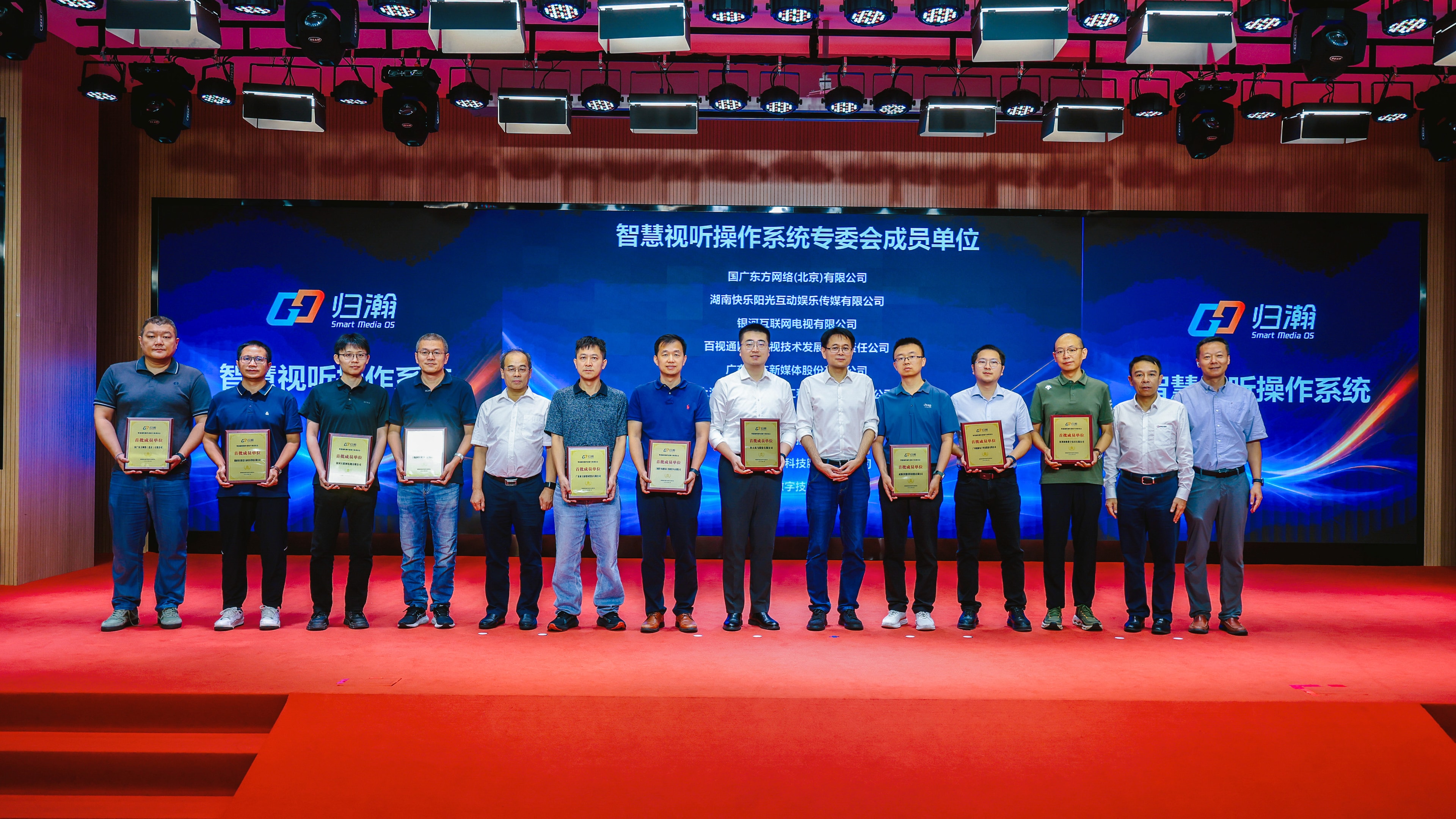
SOBEY is an inaugural member of the Smart Audiovisual Operating System Committee and the lead organization of its Professional Media Production Working Group. Drawing on its longstanding R&D expertise and engineering experience in broadcasting and professional audiovisual technologies, SOBEY contributes to the technical research and engineering validation of media OS-P and advances the application of related technologies in professional media equipment.

media OS-P is designed for professional applications including editing, broadcast graphics, ingest, playout, encoding and decoding, live processing, monitoring and intelligent video processing.
With professional video data flows at its core, media OS-P takes a systematic approach to the kernel, drivers, memory, media runtime, heterogeneous resource scheduling, professional I/O, security, and device operations and maintenance. The goal is to translate underlying hardware capabilities into professional equipment capabilities that are real-time, stable, controllable and maintainable.
Its core approach is to build a continuous processing pipeline around video data. Unified memory, shared buffers and low-copy mechanisms help reduce unnecessary data movement, while CPUs, GPUs, VPUs, NPUs and professional I/O work together on different processing tasks.
This allows video frames to move continuously through decoding, rendering, AI analysis, compositing and output. Real-time scheduling and coordinated resource management help ensure that critical media tasks are completed within defined time windows.
At the architectural level, media OS-P places particular emphasis on two layers: the kernel and drivers, and shared buffers and the media runtime. Together, these layers help translate heterogeneous hardware capabilities into a stable and controllable execution environment for professional media workflows.
Supporting the Evolution of Professional Media Equipment in the AV+AI Era
As AI becomes increasingly integrated into content production, video analysis and intelligent processing workflows, professional media equipment must support both real-time audiovisual processing and AI computing workloads.
A key challenge in the AV+AI era is enabling different computing resources to work efficiently along the same media data pipeline while maintaining the real-time performance and stability required by critical media workflows.
From underlying hardware and operating systems to the media runtime and professional applications, SOBEY continues to explore hardware-software co-designed computing architectures for professional media. The goal is not only to strengthen professional media processing capabilities, but also to enable AI capabilities to be integrated more effectively into real-world production workflows.

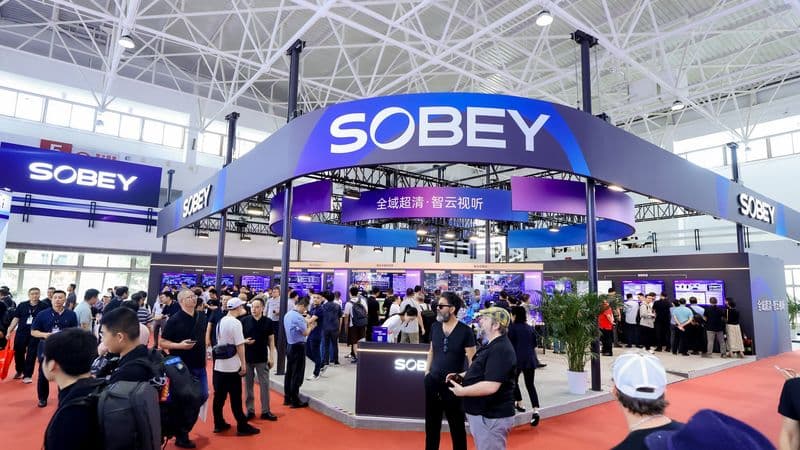
Following the inaugural plenary meeting of the Smart Audiovisual Operating System Committee of the China Society of Motion Picture and Television Engineers, representatives from the Academy of Broadcasting Science and industry experts visited the SOBEY booth at BIRTV.
The discussions covered operating systems for professional media equipment, technical work on media OS-P, and the evolution of professional audiovisual production technologies in the AV+AI era.

Looking ahead, SOBEY will continue to work with the Academy of Broadcasting Science and other member organizations to advance technical research and industry collaboration in professional media production.
Through collaborative research, engineering validation and practical applications involving research institutions and industry partners, these efforts will further support the implementation and continued evolution of relevant technologies in professional media equipment.